- Stories

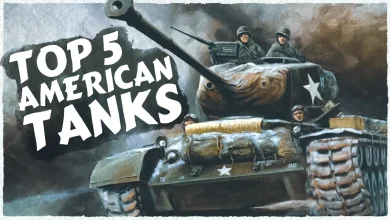
Top 5 American Tanks of World War 2
Before World War II, the United States Army thought the mission of the tank was to support infantry. The job…
- Stories
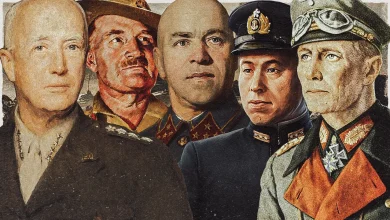
5 Most Brilliant High Commanders of World War 2
Sun Tzu, one of the world’s most legendary military strategists, wrote: "Strategy without tactics is the slowest route to victory.…
- Stories
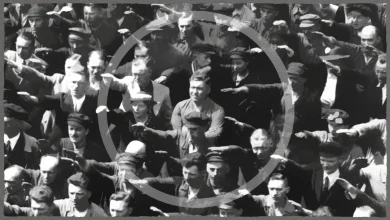
The man who refused to salute Hitler
If you frequent the internet and especially websites such as Facebook, Twitter, or Reddit, you have undoubtedly seen the following…
- Stories
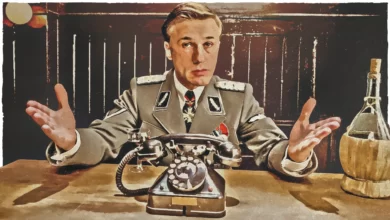
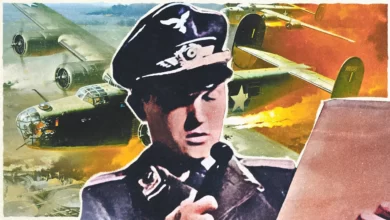
Nazi Germany’s Master Interrogator Hanns Scharff
Imagine that you’re in the middle of the Second World War and a Prisoner of War is brought to you.…
- Stories
Horrific Experiments of Unit 731
Unit 731 was the brainchild of the Imperial Japanese Army during World War II. It was a biological and chemical…
- Stories
War Dogs of World War 2
Sicily, July 1943. American soldiers are pinned down by heavy fire from an Italian pillbox. Time to bring forward their…
- Stories
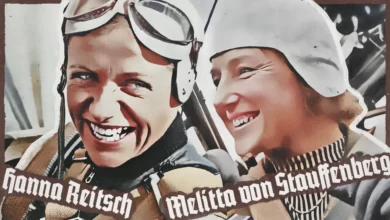
The Women Who Flew For Hitler
Hanna Reitsch and Melitta von Stauffenberg were the only two women to serve the Nazi Third Reich as test pilots…
- Stories
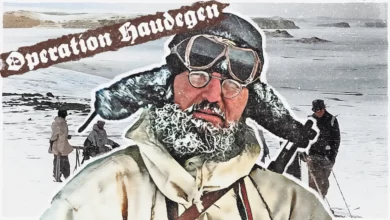
Operation Haudegen – The last German soldiers to surrender after World War 2
On the 7th of May 1945, German General Alfred Jodl signed the unconditional surrender of Nazi Germany at the Allied…
- Stories
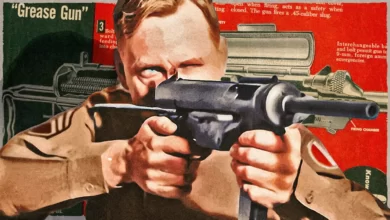
M3-M3A1 “Grease Gun”
In 1941, the US military began looking for an alternative for the Thompson submachine guns. In December of 1942, they…
- Stories
Virginia Hall – The most feared allied spy in World War 2
The most feared allied spy in World War 2 was a woman. She was an American named Virginia Hall who…
- Stories
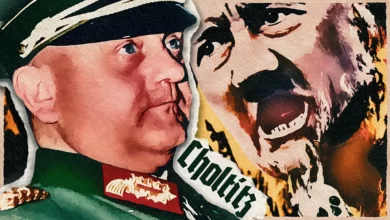
Dietrich von Choltitz – General who refused to burn Paris to the ground
Hitler's Third Reich was rapidly crumbling before his very eyes; the vast empire that had once spanned from Tripoli to…
- Stories
Operation Tidal Wave – Blowing Up Hitler’s Gas Station
Before entering World War II, the U.S Army Air Corps, which in 1941 became the Army Air Forces, developed and…
5 Most Brilliant High Commanders of World War 2
Sun Tzu, one of the world’s most legendary military strategists, wrote: "Strategy without tactics is the slowest route to victory. Tactics without strategy is the noise before defeat.” The most brilliant commanders put both into practice to achieve devastating victories. This was as true in ancient China as it was…
M3-M3A1 “Grease Gun”
In 1941, the US military began looking for an alternative for the Thompson submachine guns. In December of 1942, they adopted a new submachine gun, the M3. Built from an all-steel construction using mainly stamped parts, it fired from an open bolt and had simple controls. At first, soldiers were…
Rommel’s Kampfstaffel
Erwin Rommel was rightly called the “Desert Fox” for his brilliant handling of the German Afrika Korps for the series of seesaw battles against British Commonwealth forces in the Western Desert in North Africa. Erwin Rommel, Fritz Bayerlein, and other German and Italian officers in North Africa, 22 June 1942…
Nazi Germany’s Master Interrogator Hanns Scharff
Imagine that you’re in the middle of the Second World War and a Prisoner of War is brought to you. You know he has knowledge of an imminent bombing raid, and your superiors task you with the interrogation and making sure that the prisoner spills the beans. How do you…
Unmanned Suicide Vehicle: Goliath
Goliath tracked mine was originally modeled from a French prototype. The early models were developed to hold a capacity of 50 kilograms of explosives. The vehicle was steered remotely via a joystick control box. The control box was then attached to the Goliath by a triple-stranded cable connected to the…
The Heroic Stand of Audie Murphy at Holtzwihr
It’s January 26th, 1945. Just after 2:00 PM. The newly appointed company commander, Audie Murphy, and more than three dozen American GIs lay down on the snow-covered ground near the town of Holtzwihr in Alsace, France. In the distance, thundering booms from the German artillery are followed by eerie hissing…